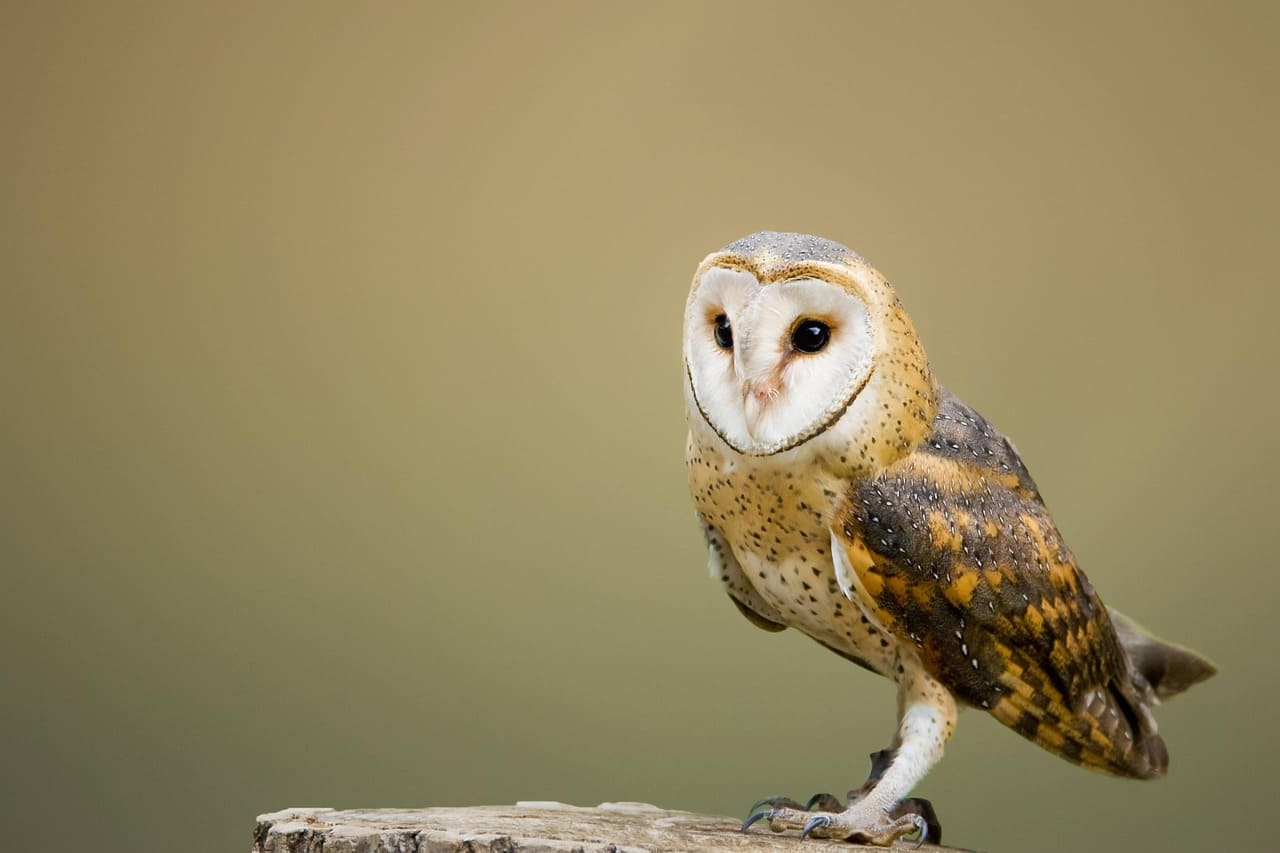
The barn owl is one of the most enchanting night-flying raptors, known for its ghostlike glide, soft wingbeats, and eerie, breathy call that drifts across open fields after sunset. Often spotted near farms, grasslands, and rural buildings, the barn owl has adapted to live close to human landscapes while still relying heavily on wild hunting grounds. With a pale heart-shaped face and soft feathers that barely make a sound in flight, this barn owl bird has long been associated with mystery, folklore, and natural pest control. Whether seen perched quietly on a fence post or gliding low over pasture at dusk, it remains an unforgettable symbol of nighttime wildlife.
Appearance, Behavior, and Hunting Skills
The barn owl’s appearance is immediately recognizable. Its white, heart-shaped facial disc focuses sound with incredible precision, helping it detect prey even in complete darkness. A white barn owl may appear almost glowing under moonlight, contrasted by buff or golden wings speckled with fine markings. While less common, some individuals show slightly darker tones or a grayish wash sometimes nicknamed barn owl blue, adding variation across different regions and climates.
Unlike many owls, the barn house owl prefers open spaces rather than deep forest. Farmland, prairies, marsh edges, and country roadsides support ideal hunting conditions. These owls locate small mammals, primarily mice and voles, by sound rather than sight. Their feathers are uniquely structured to reduce air turbulence, allowing completely silent flight. This gives the barn owl a powerful advantage, enabling it to approach prey undetected before striking swiftly with sharp talons. A single barn owl family can consume hundreds of rodents in a breeding season, making them natural pest-control allies.
Barn owls often nest in tree cavities, abandoned buildings, barns, or specially designed nest boxes. They do not build traditional nests but instead line their chosen cavity with pellets composed of compressed bones and fur spit up after digestion. These pellets provide valuable clues for scientists, teachers, and students studying local food webs and ecosystem health.
Their social and vocal behavior is equally fascinating. Instead of hooting like many owls, barn owls emit a rasping hiss or long, shrill screech reminiscent of wind-torn fabric. Young owlets beg with high-pitched calls, while adults communicate with soft clicks and chirps. Observers who hear these sounds might mistake them for distant animals, adding to the owl’s mysterious reputation.
Although barn owls are skilled, beautiful predators, they face threats including habitat loss, vehicle collisions, rodent poison, and reduced nesting spaces. Conservation programs that encourage natural hunting and provide nest boxes are vital for long-term population stability. In some cases, barn owls coexist with people who also keep companion birds like a cockatiel, showing how different bird species can thrive under human care or alongside rural living when treated with respect.
Habitats, Range, and Human Connection
These owls are found on nearly every continent except Antarctica. They adjust well to both warm and cold environments, provided there are open hunting areas and safe nesting sites. Rural landscapes with mixed grasslands offer the best opportunities, though barn owls may occasionally appear near suburban edges if hunting is good. Farmers historically welcomed them for rodent control, and many still do today. Modern conservation groups encourage replacing poisons with owl-friendly habitat improvements.
Nature enthusiasts can observe barn owls with patience, typically at dusk or dawn, near fields, barns, or quiet back roads. Red-light flashlights and distant observation help minimize disturbance. Silence, slow movement, and respect are key values when watching any nocturnal predator.
Conclusion
The barn owl remains one of nature’s most graceful nighttime hunters, combining beauty, silence, and remarkable sensory ability. From the pale glow of a white barn owl in moonlight to the soft rustle of feathers disappearing into tall grass, every encounter feels magical. Understanding how the barn house owl lives and hunts deepens appreciation for open-land habitats and responsible stewardship. Protecting these spaces ensures that future generations can continue to marvel at the barn owl and its vital role in balanced ecosystems.