
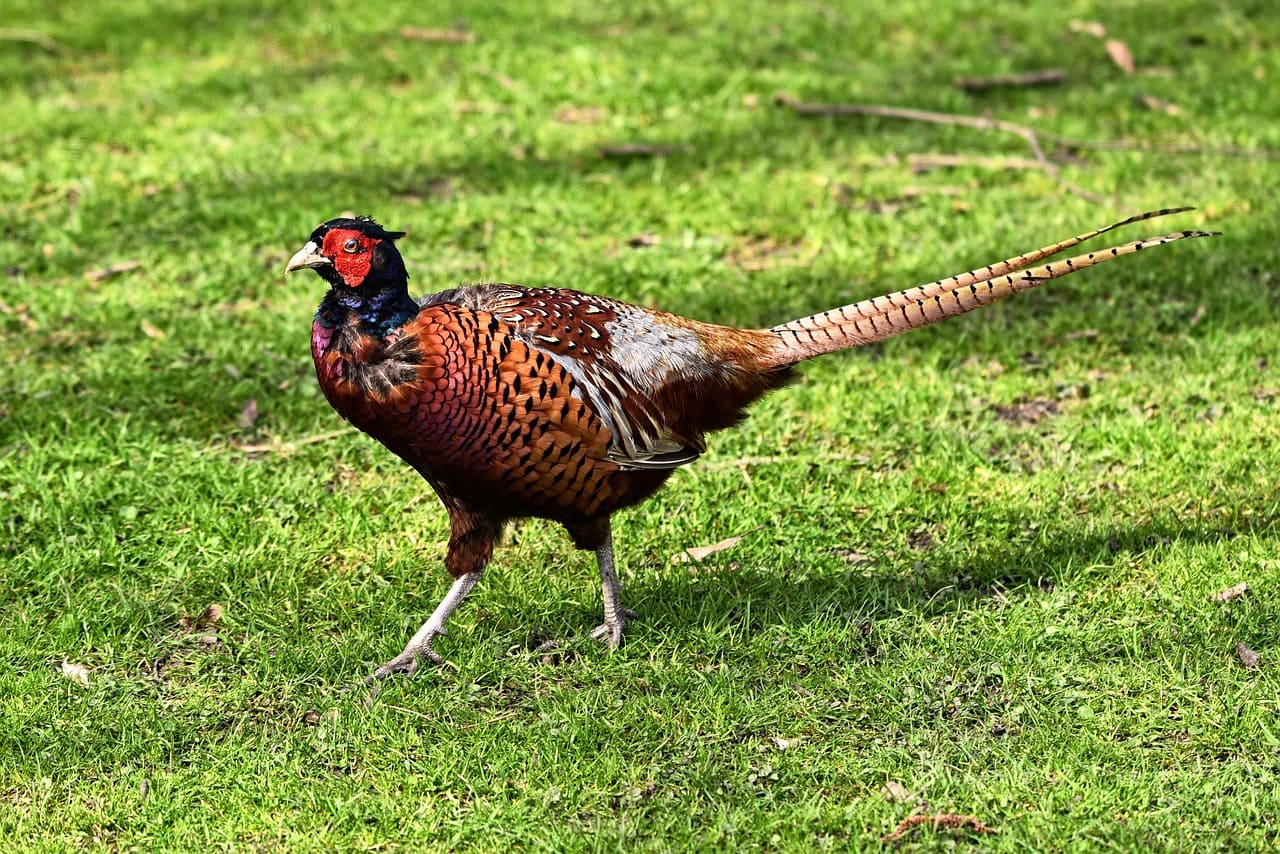
Pheasants are among the most striking ground-dwelling birds in the world, celebrated for their vibrant plumage, long sweeping tails, and alert, upright posture. Found in open farmland, meadow edges, hedgerows, and grasslands, they remain symbols of rural landscapes and traditional countryside life. The male pheasant is especially eye-catching, with vivid greens, golds, copper tones, and bold facial markings, while the female displays mottled brown feathers that help her blend perfectly with surrounding vegetation. Though they are commonly associated with game birds, their elegance, adaptability, and long history of coexistence with human settlements make them fascinating subjects for nature observers, wildlife photographers, and family hikers exploring quiet trails.
Appearance, Behavior, and Habitat
Pheasants are built for life on the ground. Their strong legs allow them to run quickly through brush and grasses, relying on speed and stealth rather than flight during most daily activities. When startled, however, they can burst into sudden wingbeats, creating a loud, surprising takeoff that startles both predators and people. Males are known for their elaborate display behaviors, including tail fanning, wing drumming, and soft but persistent vocalizations meant to attract mates and warn rivals. Females, dressed in more subdued tones, blend into nesting areas, which are typically shallow scrapes hidden in dense vegetation.
These birds thrive in patchwork landscapes rich in cover, forage, and open space. Agricultural fields, hay meadows, woodland margins, and hedge-lined country roads all provide ideal habitat. They feed on a broad menu including seeds, berries, shoots, and insects, making them well-suited for seasonal climate changes. Regions with a mix of farming and wild vegetation host some of the healthiest pheasant populations, since these areas offer opportunities for feeding, nesting, and winter shelter. Their presence often overlaps with other iconic countryside species. On quiet, moonlit nights, for example, a hunting barn owl may glide silently over the same field where pheasants roost on branch perches or ground cover, each species occupying its own niche while sharing the same landscape.
Socially, pheasants are loosely territorial and often most active at dawn and dusk. Males may defend favored areas during breeding season, but outside of that time, they are generally tolerant of others and may even gather near shared food resources. Their chicks are precocial — capable of walking and feeding shortly after hatching — but rely on parental guidance to learn foraging patterns, predator awareness, and safe travel routes across open ground.
Conservation and Human Interaction
Though pheasants remain common in many regions, long-term population success depends on maintaining suitable habitat. Modern land use changes, loss of hedgerows, and reduction of natural grasslands place pressure on nesting success and winter survival. Conservation efforts often focus on improving habitat diversity, including field borders, native plant vegetation, and seasonal cover crops that protect birds from weather and predators.
Many rural communities value pheasants as both ecological contributors and cultural symbols. While they are hunted in some areas, regulated management practices can help balance recreation with sustainable population health. Observers who prefer non-consumptive appreciation can enjoy watching pheasants at field edges, along fence lines, or near early morning dew-covered meadows, where their silhouettes and calls mark the rhythm of countryside life.
Conclusion
Pheasants are more than colorful birds of open fields — they are reminders of how wildlife and rural landscapes shape one another. Their striking appearance, ground-based lifestyle, and adaptability make them rewarding subjects for nature lovers who take time to observe quietly. From the dawn rustle of tall grasses to the sudden flutter of wings flushed from hedgerows, each encounter highlights the subtle drama of wild spaces. Protecting diverse countryside habitat ensures that future generations will continue to see and hear pheasants thriving alongside other farmland species.