
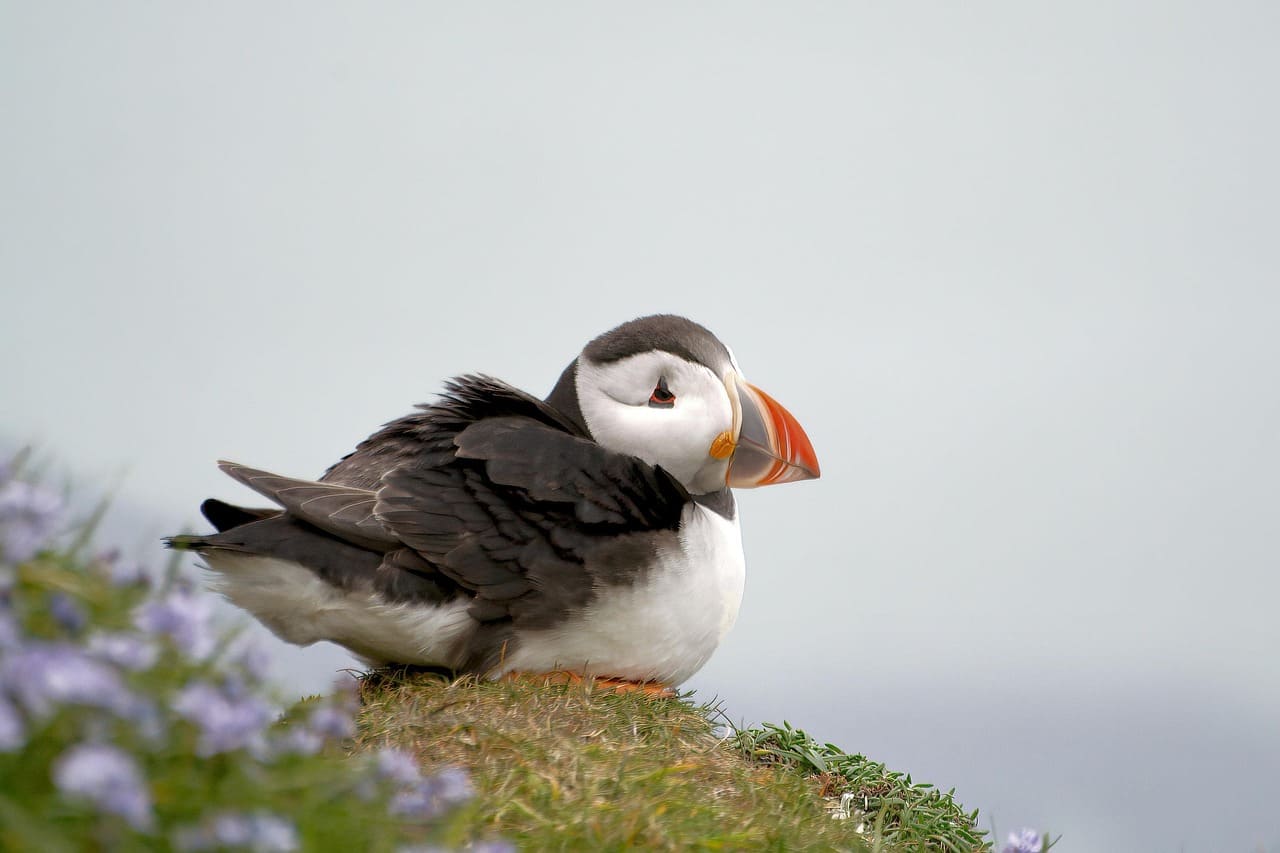
Puffins are among the most beloved seabirds on Earth, known for their colorful bills, expressive faces, and impressive underwater diving skills. Often nicknamed “sea parrots,” a puffin bird blends charm with surprising athleticism as it flies, swims, and hunts in some of the coldest oceans on the planet. While small land birds such as finches brighten forests and gardens, puffins bring life and color to rocky coasts, sea cliffs, and storm-tossed waves. Found mainly in the North Atlantic and North Pacific regions, these charismatic birds spend most of their lives at sea and return to land only briefly in spring and summer to breed. Watching their determined wingbeats and clumsy-yet-adorable steps on land is a treasured experience for wildlife enthusiasts.
Appearance, Adaptations, and Family Groups
Puffins are stout-bodied, medium-sized seabirds with black-and-white plumage, orange feet, and a thick, triangular bill that becomes most vibrant during the breeding season. The bright bill plates eventually dull and shed after nesting, highlighting how puffin coloration is adapted for seasonal communication rather than constant display. Several species exist, including the famous Atlantic puffin, the striking tufted puffin, and the distinctive horned puffin, each shaped by the harsh coastal environments they call home. The animated visuals seen in family-friendly stories like puffin rock reflect real behaviors: social gatherings, cliffside nesting, and comical waddling as birds move between burrow entrances and ocean edges.
One of the most remarkable traits of puffins is their ability to “fly” underwater. Using their wings like flippers and steering with their feet, they can dive deep below the surface to catch schooling fish such as sand eels, herring, and small crustaceans. Their compact bodies and dense bone structure allow swift movement while submerged. In flight, puffins beat their wings rapidly — sometimes over 300 times per minute — giving them a determined, buzzing motion that contrasts with their graceful diving.
Puffins nest in colonies on steep island cliffs, digging burrows or using natural crevices to protect eggs from predators. Adult pairs form long-term bonds and take turns incubating their single egg, feeding hatchlings with multiple fish carried crosswise in their bills. Their mouths contain tiny backward-facing spines allowing them to hold several fish at once — sometimes more than ten — while continuing to hunt.
Habitat, Migration, and Conservation
Colonies form along isolated islands and remote coastlines where wind, waves, and sparse vegetation dominate. The Atlantic puffin breeds primarily around Iceland, Norway, Scotland, Ireland, and eastern Canada, while horned puffin and tufted puffin colonies appear along the northern Pacific rim from Alaska to Japan. After breeding, puffins scatter across ocean waters for months, rarely touching land until the next nesting season.
Because puffins depend on stable fish populations and safe coastline habitat, they are vulnerable to shifting ocean temperatures, pollution, plastic waste, and severe storms. Coastal lighting, introduced predators, and overfishing threaten both adult and juvenile survival. Conservation organizations focus on restoring habitats, reducing marine pollution, and supporting sustainable fishing practices. In some areas, decoy puffins and carefully designed environments have successfully encouraged birds to recolonize former nesting cliffs.
Conclusion
Puffins are more than charming coastal icons — they are resilient marine specialists whose lives depend on healthy oceans, abundant fish, and protected nesting grounds. From the familiar puffin bird seen in documentaries to the dramatic profiles of tufted puffin and horned puffin colonies along rugged cliffs, each species reflects a powerful blend of beauty, instinct, and endurance. Their colorful presence complements the quieter melodies of land birds such as finches, reminding us that wildlife flourishes in many forms and settings. Safeguarding puffin habitats ensures that future generations can marvel at their bright bills, deep dives, and joyful summer gatherings along the world’s most dramatic coastlines.