
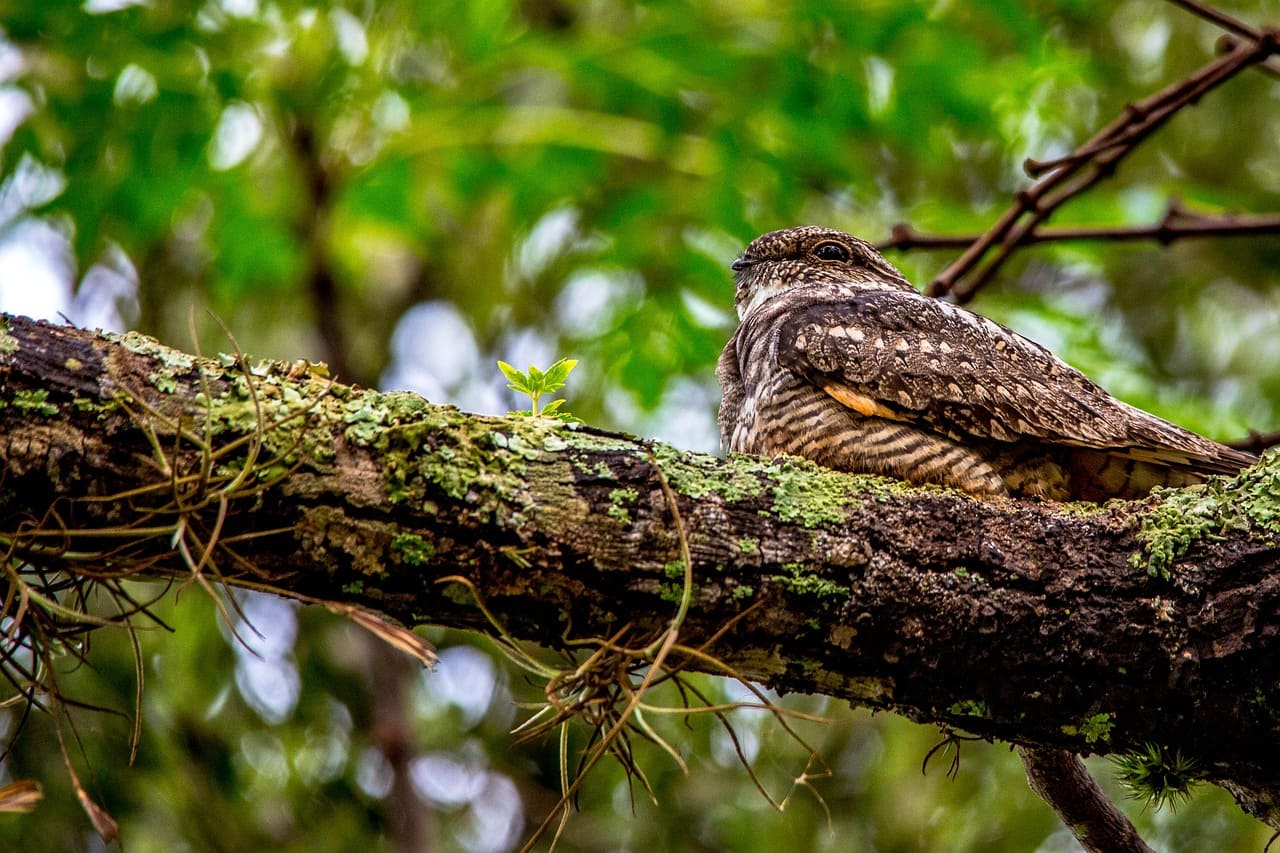
The whippoorwill is one of the most mysterious and enchanting night birds in North America, known for its rhythmic, echoing call that drifts across forests and rural clearings at dusk. Unlike many species that rely on daytime singing, the bird whippoorwill performs its music under the stars, creating an unforgettable atmosphere for campers, hikers, and anyone who pauses long enough to listen. Its presence is subtle, since it blends easily into leaf litter with mottled brown plumage, but its signature whippoorwill song can carry for long distances when the landscape grows quiet. While daytime birds like seagulls fill shorelines with noise and movement, the whip bird rules the nighttime soundscape with patience, stealth, and haunting beauty.
Appearance, Habitat, and Behavior
The whippoorwill belongs to the nightjar family, a group of birds known for cryptic camouflage, wide mouths designed for catching insects, and silent, buoyant flight. Its coloring resembles bark, dried leaves, and tree shadows, making it almost impossible to see unless it moves. During daylight hours, it rests motionless on logs, ground cover, or low branches. At dusk, it comes to life, hunting moths, beetles, and other flying insects using its oversized mouth and precise midair turns. The whip bird does not build traditional nests; instead, it lays its eggs directly on leaf litter, relying on camouflage rather than construction.
Whippoorwills prefer quiet, semi-open woodland habitats, especially places with clearings, gravel roads, forest edges, and meadows nearby. These landscapes offer ideal hunting pathways while still providing shelter. Their distribution ranges across much of eastern and central North America, with populations shifting seasonally. Though silent during winter, their arrival in late spring or early summer is celebrated by naturalists as a sign of longer, warmer nights ahead.
Perhaps the most iconic feature of this species is its vocal performance. The whippoorwill song — a repetitive three-part phrase — can repeat hundreds of times without interruption. Some individuals may call throughout an entire moonlit night, particularly during breeding season. This repetition once inspired folklore, poetry, and even superstitions, with some cultures believing the song foretold change, luck, or weather patterns.
Observing Whippoorwills
Finding a whippoorwill during the day requires exceptional patience, but listening for them at night is far easier. The best times are late spring and early summer when temperatures rise and insects become abundant. Choose forested areas with nearby clearings and stay still after sunset. Instead of searching visually, focus on soundscape awareness.
To improve observation success:
- Move slowly and avoid bright lights
- Listen for repetition rather than volume
- Watch for low, silent glides across open paths
- Stay respectful and avoid disturbing nest areas
Photography is challenging, but audio recording can be a meaningful alternative. Many birders keep audio logs of the whippoorwill song, noting time, weather, and moon phase, since calls often increase on bright, moonlit nights.
Conclusion
The whippoorwill is a master of nighttime survival, communication, and camouflage. From its barely visible form to its haunting whippoorwill song that can rise and fall for hours, the bird whippoorwill remains one of the most unforgettable species in North American woodlands. While daytime birds such as seagulls capture our attention with movement and noise, the whip bird teaches a different rhythm — one of patience, stillness, and listening. By protecting forest edges, reducing light pollution, and honoring nighttime wildlife, we ensure that future generations can experience this evening chorus beneath moonlit skies.