
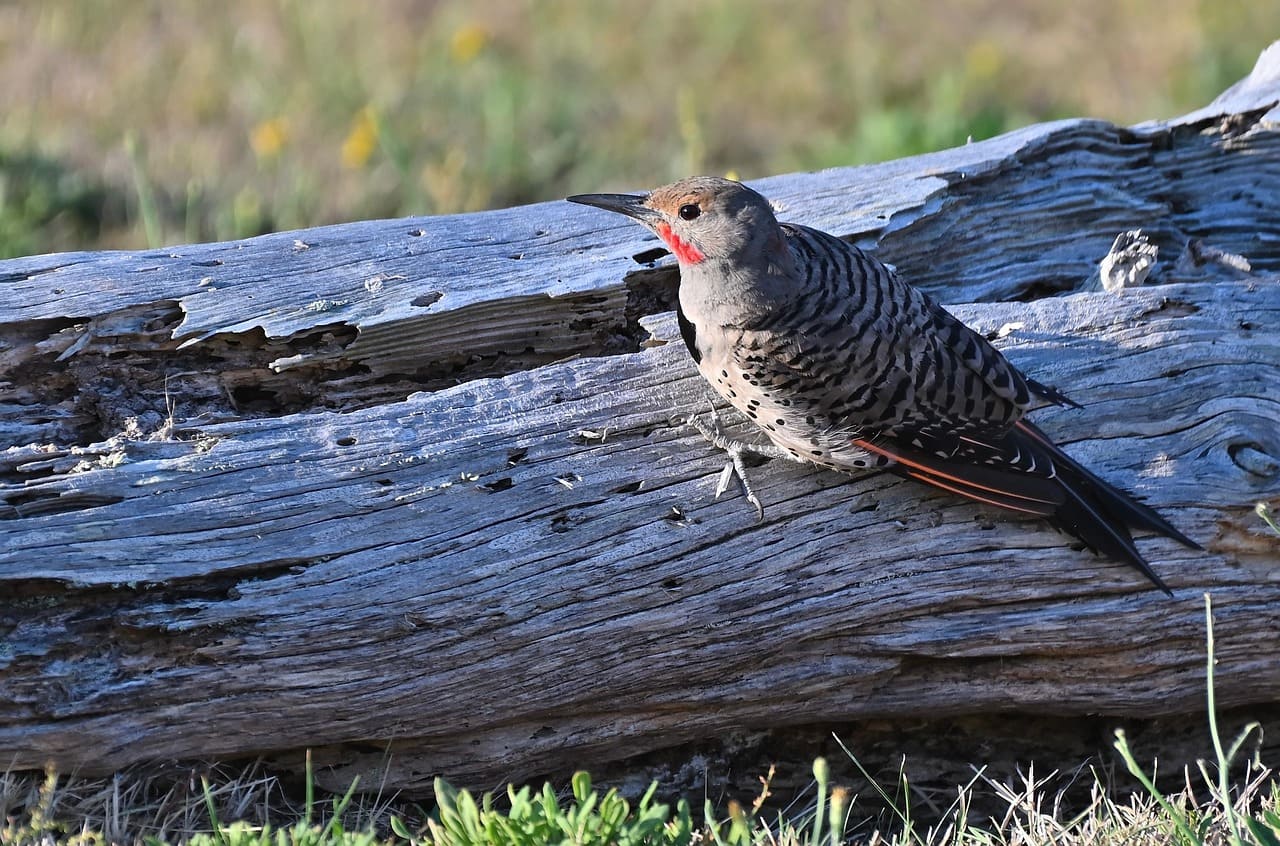
The northern flicker is one of the most recognizable woodpeckers in North America, admired for its spotted belly, bold wing colors, and graceful low-to-the-ground hunting style. Unlike traditional woodpeckers that forage high on tree trunks, this flicker bird is often seen on the forest floor searching for ants and beetles, making it uniquely suited to open forests, meadows, and even backyard lawns. Observing a bird flicker woodpecker can inspire beginner and expert birders alike, especially when its sharp call echoes through quiet woodland trails. Its presence adds excitement to encounters with songbirds and other wildlife, offering a deeper appreciation for ecosystems that support diverse species.
Appearance and Behavior
The northern flicker belongs to the woodpecker family, yet many of its habits set it apart. Instead of drilling deep into bark for food, the northern flicker spends much of its time flicking leaves and probing soil for insects. Its long, sticky tongue is perfectly designed to capture prey underground, making it a highly effective predator of ants. Across North America, two primary forms are recognized: the flicker yellow shafted, found mostly in the eastern regions and known for its golden wing and tail feathers, and the gilded flicker, found in the Southwest and desert habitats with sun-washed tones and subtle markings. Both varieties share distinctive features such as a white rump patch visible in flight, subtle facial markings, and speckled underparts.
Communication is another fascinating behavior. The bird flicker woodpecker uses sharp calls and rhythmic drumming on hollow surfaces like trees, metal signs, and chimneys. These sounds help establish territory and attract mates. During spring courtship, pairs engage in gentle displays of head bobbing, wing flashing, and soft vocalizations. When nesting, they choose natural tree cavities or abandoned holes, but they will also accept nest boxes if properly placed. Their abandoned nesting sites later provide safe homes for other animals, making them beneficial to the broader wildlife community.
Diet also shapes their ecological role. While most woodpeckers rely heavily on insects within bark, flickers prefer ground-dwelling insects, especially ants. They will occasionally eat berries, seeds, and fruits, but insects remain their main food source. This diet offers natural pest control and complements the feeding habits of other insect-eating songbirds in shared habitats.
Where to Spot Northern Flickers
Northern flickers thrive in mixed landscapes including forests, woodland edges, river valleys, parks, and suburban green spaces. To find them, look toward the ground rather than the treetops. Listen for repetitive calls or drumming patterns that carry well across open areas. Early morning is ideal, when these birds are active and feeding. Birding journals, photographs, and patient observation can help track seasonal migration and behavior changes. Spotting a flash of yellow feathers from a flicker yellow shafted lifting off or a gilded flicker perched against desert stone is a rewarding moment for any wildlife observer.
Conclusion
The northern flicker is one of the most engaging birds to study, offering unique behavior, striking visual traits, and beneficial ecological contributions. Whether you encounter the flicker yellow shafted in eastern woodlands or the gilded flicker in arid landscapes, each sighting deepens appreciation for the diversity of North American birds. Taking time to watch and understand the flicker bird enriches every outdoor experience and reminds us how interconnected species like woodpeckers and songbirds are to healthy habitats.